
What most companies do in the wrong order
Many data programs start off operationally plausible. A business department demands better transparency. IT modernizes the platform. An innovation team identifies AI use cases. A governance project creates standards. Everything about this sounds reasonable. The only thing not yet answered is why these initiatives exist together in the first place.
The result is well-known: multiple project strands, multiple stakeholders, multiple dashboards—but no single point of control. Then there is discussion about architecture, tools, and ownership, even though the real question remains unresolved: Which business problem takes priority, and which data initiatives visibly contribute to it?
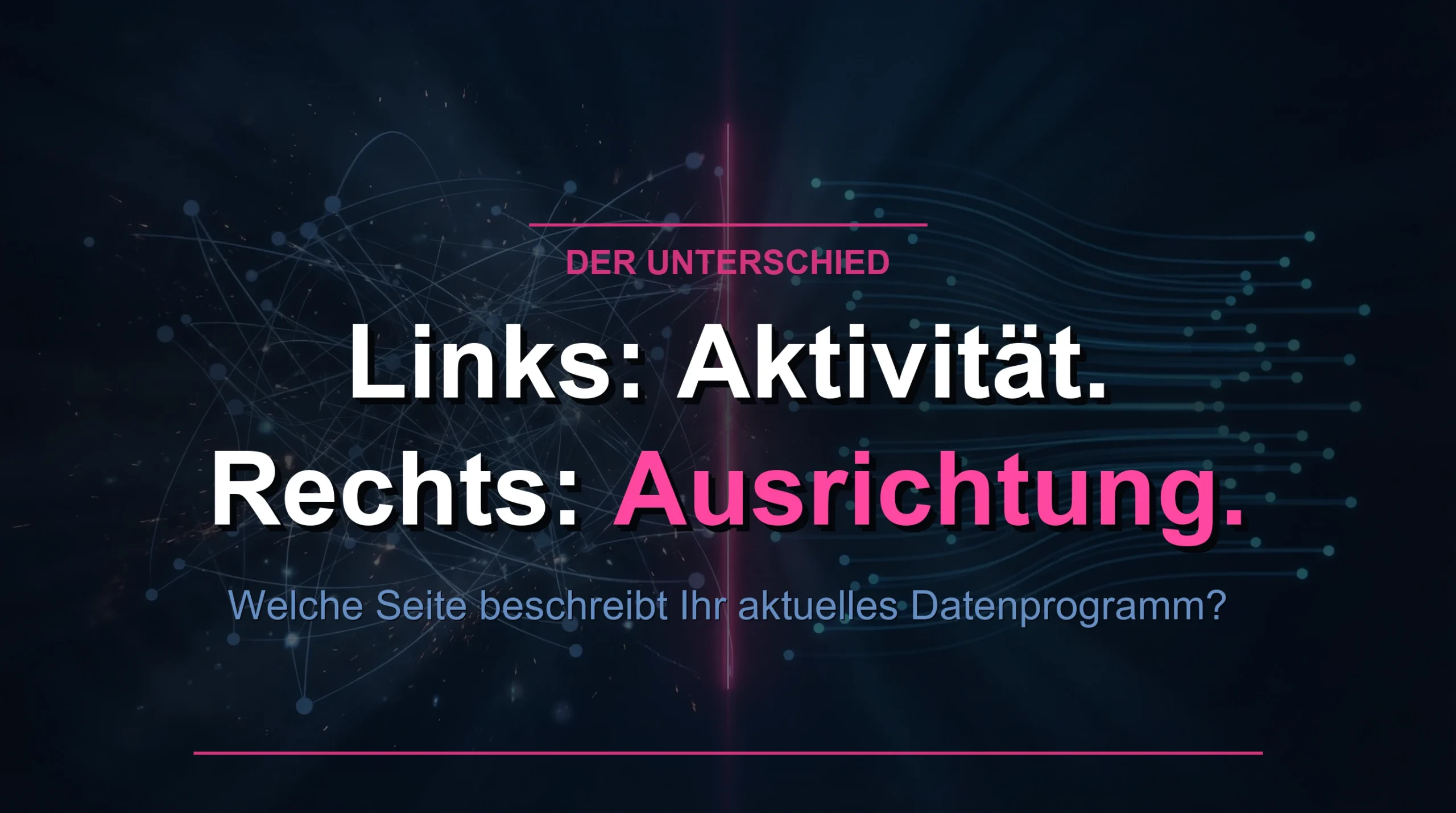
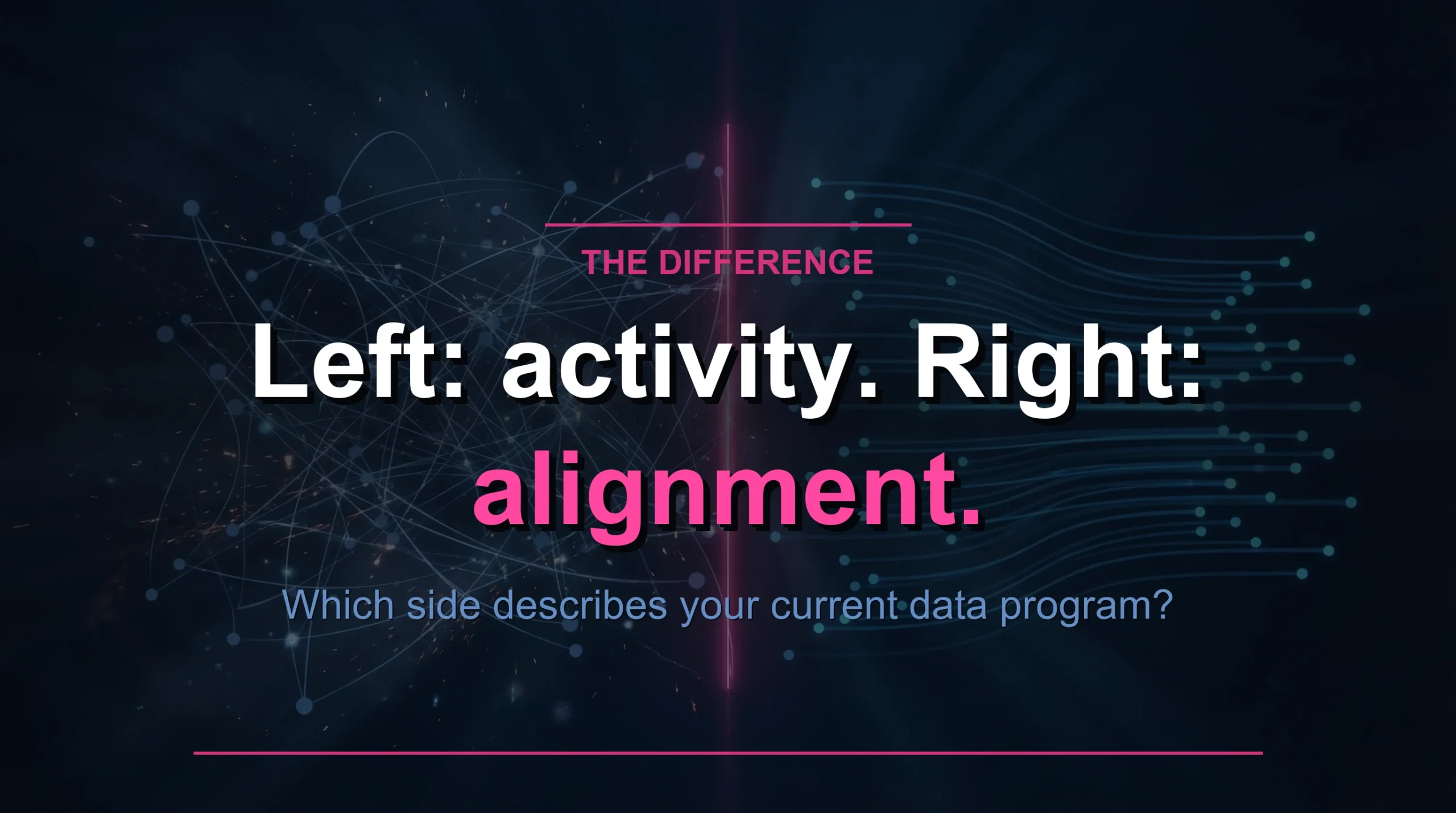
Companies often confuse activity with alignment. They build data products before it is clear which management decision is supposed to be improved by them. This is precisely how data programs with high utilization—but weak impact—are created.
Alignment means declining it all the way from the corporate strategy down to the individual initiative
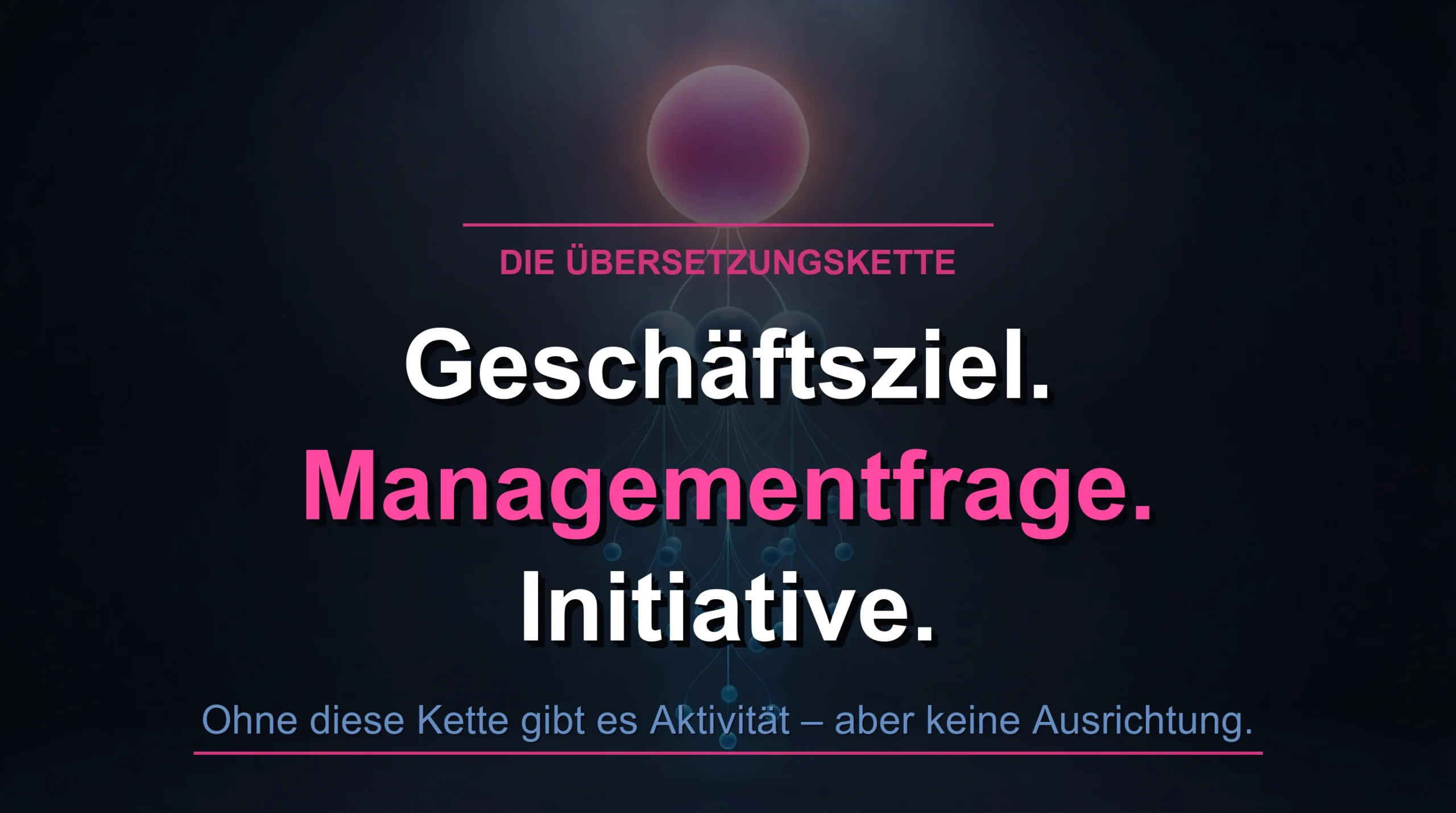
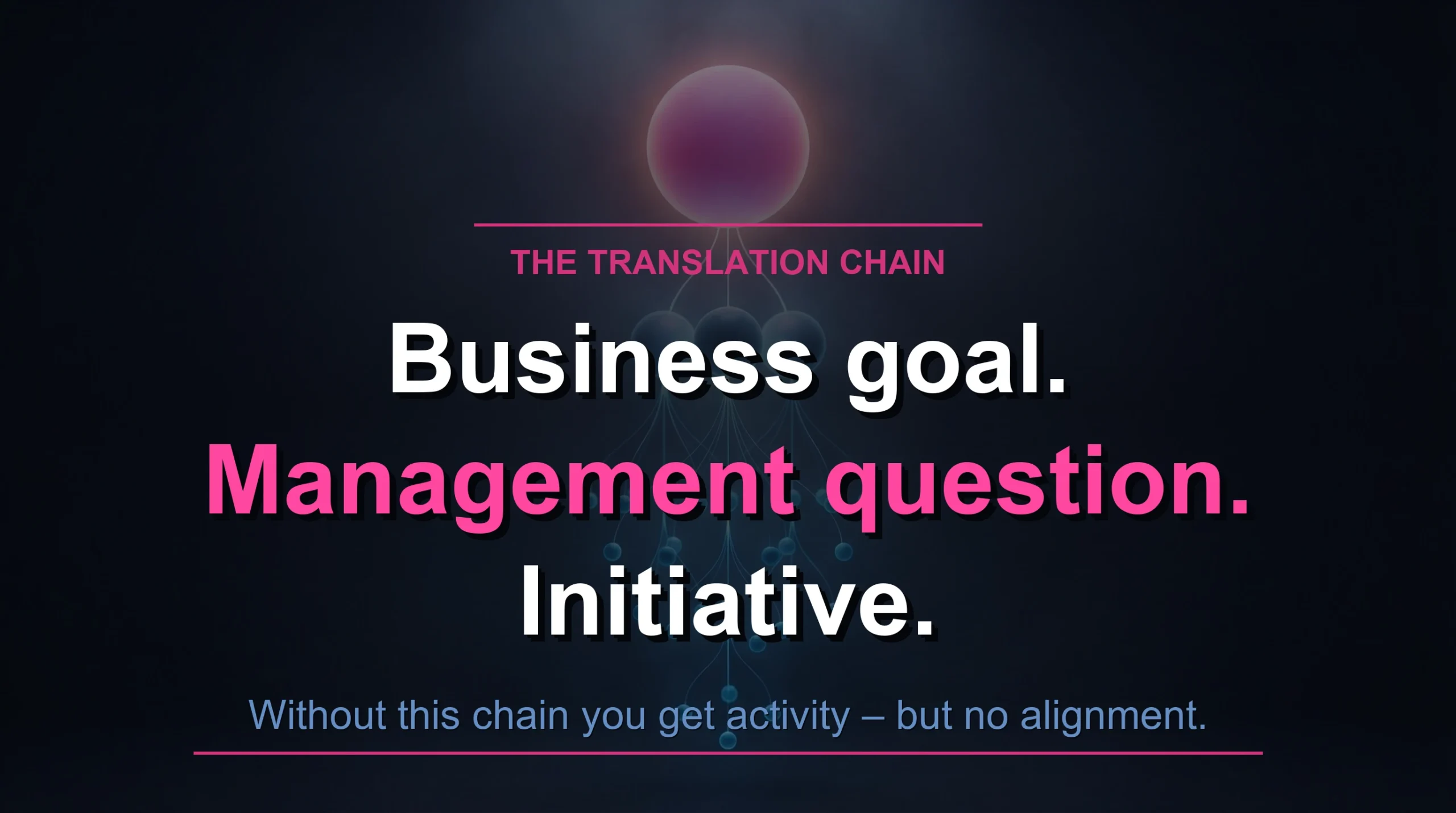
Strategic alignment is not a kick-off slide with corporate goals in the header. It is a robust translation chain. This chain must make it traceable how a business goal translates into concrete data work.
Business goal
Which lever is in focus – growth, cost, risk, cash, time-to-decision, service quality?
Management question
What decision should be made better in the future than today?
Data initiative
Which capability, product, or use case contributes directly to this exact decision?
Only when this logic is visible can prioritization be done reliably. Then it becomes clear which initiatives are strategically relevant, which are only locally useful, and which are primarily just generating activity.
A recent example: SAP's „Clean Core“ strategy shifts the dependency from ABAP customizing to APIs, BTP services, and semantic data products. Anyone who treats this merely as a technology project is repeating the old mistake—the alignment question ends up behind the tool question once again.
The crucial question is not: What use cases do we have? But rather: Which decisions need to become better?
This distinction is central. Use cases are often too low in their logic. They describe an application. A good data strategy starts higher: with the decisions that generate impact in the company. Pricing decisions. Inventory decisions. Capacity decisions. Risk decisions. Portfolio decisions.
When it becomes clear which decisions need to improve, prioritization gets tougher – but also cleaner. Then data products, reporting, governance, and AI can no longer be discussed in isolation, but as tools for better decisions.
How to instantly recognize a lack of alignment
- There are many initiatives, but no clear connection to the same business goals.
- Several teams are working on data without a shared KPI logic.
- Use cases are prioritized by visibility or sponsorship – not by impact.
- Governance is treated as a mandatory exercise, not as a prerequisite for controllability.
- Sovereign cloud requirements such as data residency and operational control are treated as pure infrastructure topics – not as strategic alignment decisions.
- The organization cannot state which measures it is consciously not pursuing.
Especially the last point is important. A good data strategy not only shows what is being done. It also makes visible what is deliberately omitted because the contribution to the vision is not strong enough.
How AdEx Partners proceeds in this step
In practice, this means: We don't just work out business goals on an abstract level. We translate them into decision-making areas, control metrics, and capability requirements. Only from this does it emerge which data initiatives truly deserve priority.
That changes the discussion. Suddenly, it is no longer about individual tool requests, but about an architecture of impact: Which capability do we need first? Which responsibility needs to become clearer? Which database is non-negotiable? And which initiative can wait without causing business harm?
The output of this step is not a use case backlog.
- Overview
- Step 1: Alignment with business goals
- Step 2: Honestly assess maturity level
- Step 3: Roadmap with clear priorities